How to Find the Right Job in 2026. A Practical Guide For Job Seekers

posted:1 day agobyHaseeb Ahmedin Jobs
Finding the right job requires more than simply sending your CV to as many companies as possible. A successful job search involves understanding your career goals, identifying suitable job vacancies, creating a professional CV, preparing strong applications, developing relevant skills, and getting ready for job interviews.
Whether you are a fresh graduate, an experienced professional, changing careers, or returning to work, having a structured approach can make job hunting more organised and productive. Current career guidance commonly recommends focusing applications on suitable roles, tailoring CVs to job descriptions, using multiple job-search channels, and keeping track of applications.
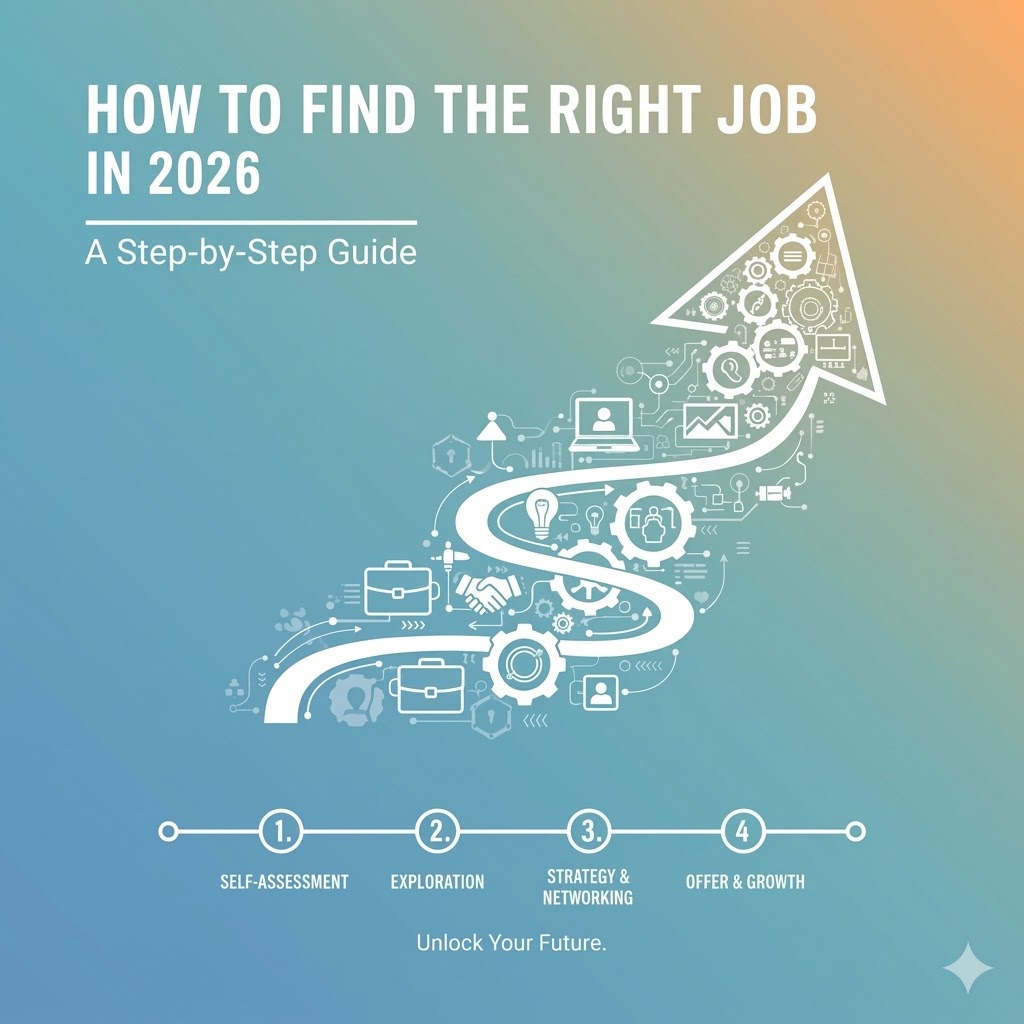
This guide explains six practical steps that can help job seekers approach their search more effectively and prepare for long-term career development.
1. Understand Your Career Goals and the Type of Job You Want
Finding the right job starts with understanding what you want from your career. Before searching through job vacancies, take some time to identify your professional interests, existing skills, previous experience, qualifications, and long-term career goals. Having a clear idea of the type of work you want can make your job search more focused and productive.
Consider the industries and job roles that match your experience and interests. For example, someone with strong communication and organisational skills may explore administration, customer service, recruitment, sales, or project support roles. Someone with technical experience may consider software development, IT support, data analysis, cybersecurity, or other technology jobs.
It is also important to consider practical factors such as location, working hours, salary expectations, remote or hybrid working options, career progression, and company culture. Understanding these factors before applying can help you identify career opportunities that are more suitable for your circumstances.
A focused job search is generally more useful than applying for every vacancy available. Search for specific job titles and use relevant terms related to your skills and experience. For example, instead of searching only for "jobs", you could search for "customer service jobs", "administrative assistant jobs", "software developer jobs", or "marketing jobs".
Defining your target roles can also help you prepare a more relevant CV and improve the quality of your job applications.
2. Build a Professional CV That Matches the Job
Your CV is an important part of your job application because it provides employers with an overview of your professional background. A well-written professional CV should clearly present your experience, skills, qualifications, achievements, and relevant career history.
Start with a clear personal profile that briefly explains who you are, what you can offer, and the type of opportunity you are looking for. Your employment history should then highlight your most relevant responsibilities and achievements. Whenever possible, focus on results rather than simply listing tasks.
For example, instead of writing:
Responsible for managing customer enquiries.
You could write:
Managed daily customer enquiries, resolving issues efficiently while maintaining a high standard of customer service.
The second example gives more context about the contribution made in the role.
It is also important to tailor your CV to individual job applications. Carefully read the job description and identify important terms relating to required skills, qualifications, experience, software, responsibilities, or industry knowledge. If you genuinely have those skills, use relevant terminology naturally in your CV.
Career guidance for job seekers also commonly recommends using clear formatting, standard section headings, accurate employment dates, and relevant skills rather than unnecessarily complicated designs.
Avoid including unnecessary information that does not support your application. Keep your CV organised, easy to read, and professionally formatted. Check spelling and grammar before submitting it, and make sure your contact details and employment dates are accurate.
A strong CV does not need to be complicated. Its purpose is to communicate your professional value clearly and demonstrate why your experience and skills are relevant to the position.
3. Use Different Methods to Search for Job Opportunities
A modern job search can involve several different channels. Online job boards, recruitment agencies, company career pages, professional networking platforms, and personal recommendations can all provide access to employment opportunities.
When searching online, use specific keywords rather than broad searches. Instead of searching only for "jobs", consider terms such as:
- Administrative assistant jobs
- Customer service jobs
- Software developer jobs
- Marketing jobs
- Sales jobs
- HR jobs
- Accounting jobs
- Project coordinator jobs
You can also add a location, experience level, or industry to make your search more specific.
Company websites are another useful source of job vacancies. Some employers publish positions directly on their career pages, allowing candidates to apply directly. Creating profiles on reputable employment websites can also make it easier to save searches, upload your CV, and monitor new opportunities.
Networking can be equally valuable. Connecting with former colleagues, industry professionals, recruiters, and people working in your target field may help you discover opportunities that you would not otherwise find.
Professional networking should focus on building genuine relationships rather than simply asking people for a job. Share relevant professional achievements, participate in industry discussions, and keep your professional profile up to date.
You should also keep a record of the positions you apply for. A simple spreadsheet can include:
Keeping track of applications can prevent missed deadlines and help you understand where you are in the recruitment process.
Most importantly, prioritise legitimate employers and trusted job platforms. Be cautious if a supposed employer asks you to pay money simply to obtain a job. Verifying recruiters and applying through official company websites where possible can help reduce the risk of fraudulent job advertisements.
4. Prepare Carefully for Job Interviews
Receiving an interview invitation is an important stage in the recruitment process, but interview preparation is essential. Employers may assess your experience, technical knowledge, communication skills, problem-solving ability, motivation, and understanding of the role.
Begin by researching the organisation. Learn about its products or services, customers, industry, values, and the responsibilities associated with the position.
Re-read the job description and identify examples from your previous experience that demonstrate the skills the employer is looking for.
For example, if a job requires teamwork, prepare an example that demonstrates how you worked successfully with colleagues. If the role requires problem-solving, think of a situation where you identified a problem, took action, and achieved a positive result.
Prepare answers for common job interview questions, including:
- Tell me about yourself.
- Why are you interested in this position?
- Why do you want to work for our organisation?
- What are your strengths?
- What is an area you are working to improve?
- Tell us about a challenge you faced at work.
- Describe a time when you worked as part of a team.
- Why should we consider you for this role?
- Where would you like to develop your career?
Where appropriate, use specific examples rather than giving vague answers.
Interview preparation should not mean memorising every answer word for word. Instead, understand the key points you want to communicate. This allows your answers to sound natural while ensuring that you cover the most relevant information.
You should also prepare questions to ask the employer. Questions about responsibilities, team structure, training, career development, performance expectations, and the next stage of the recruitment process can help you understand the opportunity more clearly.
Whether an interview takes place in person, over the telephone, or through a video platform, professional communication and preparation can help you present your experience clearly.
5. Develop the Skills Employers Need
The employment market continues to evolve, and employers across different industries often look for a combination of technical and transferable skills. Developing your professional skills can strengthen your CV and help you remain prepared for new career opportunities.
Communication, teamwork, organisation, problem-solving, time management, adaptability, and customer service are examples of transferable skills that can be valuable across many different occupations.
Depending on your chosen industry, you may also need technical knowledge, software skills, qualifications, certifications, or specialist training.
Consider which skills are most relevant to the roles you want to pursue. If job descriptions repeatedly mention a particular skill that you do not currently have, consider learning it through:
- Online courses
- Professional qualifications
- Practical projects
- Volunteering
- Workplace training
- Industry certifications
- Personal development programmes
For example, someone interested in digital marketing might develop skills in SEO, analytics, content creation, social media, and advertising platforms. Someone pursuing an IT career might focus on programming languages, databases, cloud platforms, cybersecurity, or software development tools.
The important point is to develop skills that are relevant to your intended career direction rather than trying to learn everything at once.
Creating a personal development plan can make learning more manageable. Set realistic goals, identify the resources you need, and monitor your progress.
You can also add relevant new skills and certifications to your CV as you develop them. Practical projects can be particularly useful because they give you examples to discuss during interviews and demonstrate how you have applied your knowledge.
Professional development does not stop after you secure a job. Continuing to learn can help you adapt to changes within your industry and prepare for future responsibilities.
6. Continue Developing Your Career After Finding a Job
A successful career involves more than simply finding a job. Once you secure employment, continue thinking about your professional development and future career opportunities.
Keep your CV updated with new responsibilities, achievements, qualifications, projects, and skills. You do not have to wait until you need a new job to update your CV. Maintaining an up-to-date record can make future applications much easier.
Look for opportunities to take on new responsibilities, participate in training, learn new technologies, and develop relationships with colleagues and professionals in your industry.
If your employer provides professional development opportunities, make use of them where they align with your career goals.
It can also be useful to review your career goals regularly. Your interests and priorities may change as you gain experience. A role that was suitable earlier in your career may eventually lead you towards management, specialist positions, entrepreneurship, or another professional direction.
You should also pay attention to developments within your industry. New technologies, changing customer expectations, emerging roles, and updated professional standards can influence the skills employers require.
Maintaining professional connections can also support long-term career growth. Stay in contact with former colleagues, mentors, recruiters, and other professionals within your field.
How to Make Your Job Search More Effective
A successful job hunting strategy does not necessarily mean submitting the highest possible number of applications. It means making your applications relevant, organised, and consistent.
Consider creating a weekly job-search routine.
Monday: Review New Jobs
Check relevant job boards, company career pages, recruitment agencies, and professional networking platforms.
Tuesday: Improve Your CV
Review your CV and tailor it for the roles you are interested in. Make sure your relevant skills and experience are easy to identify.
Wednesday: Submit Applications
Focus on suitable vacancies and complete each job application carefully.
Thursday: Develop Your Skills
Spend time learning a skill, completing a course, working on a project, or improving an area related to your target career.
Friday: Prepare for Interviews
Practise common interview questions and review examples from your previous work experience.
Weekend: Review Your Progress
Check the applications you submitted, update your tracking document, and identify areas where you can improve.
A structured routine can make the process easier to manage and can help you avoid losing track of applications.
Common Job Search Mistakes to Avoid
Even qualified candidates can make mistakes during their job search. Avoiding common problems can help you present yourself more professionally.
Applying for Every Job
Applying for every available vacancy may result in applications that do not match your skills or career goals. Focus on positions where your qualifications and experience are relevant.
Using the Same CV for Every Application
A generic CV may not clearly demonstrate why you are suitable for a particular role. Tailor relevant sections according to the requirements of the position.
Ignoring the Job Description
Read the complete job description before applying. Pay attention to responsibilities, qualifications, required skills, location, working arrangements, and application instructions.
Failing to Proofread
Spelling mistakes, incorrect dates, broken formatting, and inaccurate contact details can create avoidable problems. Always review your CV and application before submitting them.
Not Preparing for Interviews
An interview should not be treated as a conversation that requires no preparation. Research the employer, understand the role, and prepare relevant examples beforehand.
Stopping Your Development
Career development should continue after you find employment. Keep learning and look for opportunities to strengthen your professional skills.
Final Thoughts
Finding the right job is a process that requires planning, preparation, and continuous development. Start by identifying your career goals and the type of work you want to pursue. Build a clear and relevant professional CV, search through multiple sources of job vacancies, prepare carefully for job interviews, and continue developing the skills employers value.
Whether you are a graduate searching for your first opportunity or an experienced professional looking for a new direction, a structured approach to job search can help you make better use of your time and focus on relevant opportunities.
Remember that career development does not end when you receive a job offer. Keep your CV updated, continue developing your professional skills, build meaningful professional connections, and regularly review your goals.
With consistent career advice, effective job hunting, strong application preparation, and a commitment to career growth, you can stay prepared for new employment opportunities throughout your professional journey.
Powered by Froala Editor